
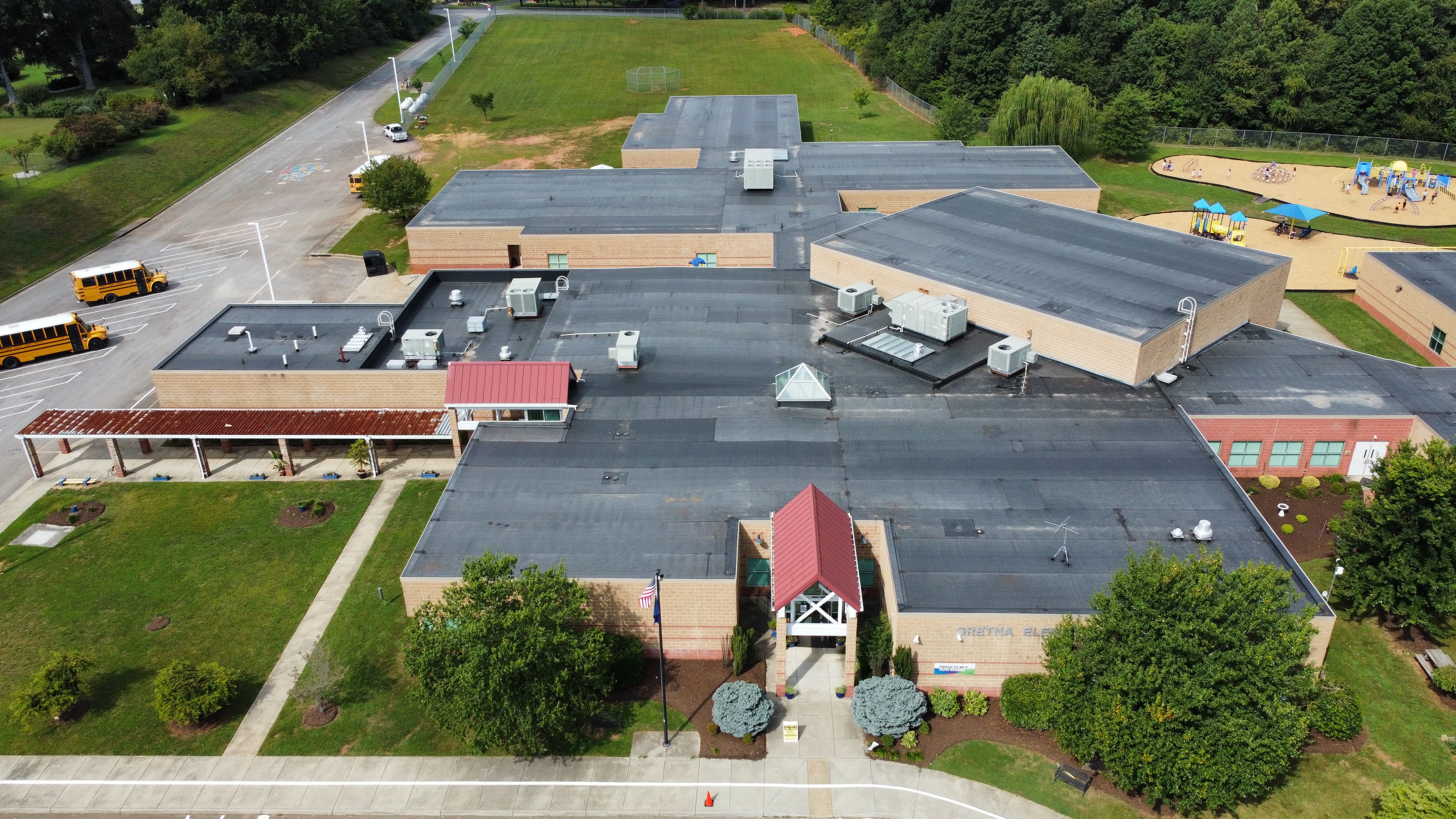
School and K-12 Educational Building Roofing roof planning built from the roof condition.
Commercial roof scope, documentation, access planning, and weather-aware scheduling for acrylic roof coatings.
DC Public Schools, the District's primary municipal school system serving over 49,000 students across more than 100 campuses, operates one of the most complex school building portfolios in the nation—a mixture of late nineteenth-century masonry landmarks in historic neighborhoods, mid-century modern buildings of architectural significance, and recently modernized facilities rebuilt during the DC school modernization program that has transformed dozens of campuses since 2009. Reroofing work for DCPS is governed by a procurement and oversight framework that is more rigorous and multi-layered than virtually any other school district context in the country.
The DC Department of General Services oversees capital construction for DCPS and applies procurement rules that reflect the District government's heightened accountability standards following years of financial oversight intervention. All reroofing contracts above specified thresholds require competitive bidding through the District's procure.dc.gov portal, inclusion of certified business enterprise participation requirements under DC's CBE law, and compliance with the DC Living Wage Act. We are certified to work within this procurement framework, maintain required insurance and bonding levels, and document CBE participation in the formats required by DGS project managers and the Office of Contracting and Procurement.
Historic school buildings constitute a substantial portion of the DCPS portfolio. Paul Laurence Dunbar High School, Cardozo Education Campus, and numerous elementary schools in Capitol Hill, Georgetown, and other established neighborhoods carry historic designations that require Historic Preservation Office review of material and design changes including reroofing. The HPO review process for DCPS projects involves coordination between the school system, DGS, and the historic preservation staff that can add months to project timelines if not initiated early. We identify HPO applicability during pre-project assessment and recommend that the District begin the HPO process at least six months before desired construction start.
Certified Business Enterprise participation requirements under DC law require DCPS contractors to engage DC-certified small, local, and disadvantaged business enterprises in subcontracting roles. For roofing projects, CBE participation typically involves sheet metal, demolition, and insulation subcontractors. We maintain an established network of qualified DC CBE roofing and construction subcontractors and include their participation in project bids as a substantive commitment rather than a paper compliance exercise. DGS project managers have recognized our CBE utilization record as evidence of genuine commitment to the law's economic development objectives.
Prevailing wage requirements under the DC Living Wage Act and, where applicable, the federal Davis-Bacon Act apply to most DCPS reroofing projects. DC wage determinations for building trades are published by the DC Auditor's Office and are typically higher than federal Davis-Bacon rates for the same classification. We build these wage requirements into our bid pricing and provide certified payroll documentation on the schedule required by DGS contract administrators. Our payroll compliance record is clean across all DCPS projects we have completed, which is a meaningful qualification given the auditing attention that DC public construction contracts receive.
The unique urban density of Washington DC creates rooftop logistics challenges that do not exist in suburban school markets. Many DCPS schools are surrounded by rowhouses, commercial buildings, and public streetscapes that prevent the use of standard rooftop crane approaches. Material hoisting with material lifts, limited staging on rooftop or tight ground areas, and strict weight-limit coordination with DC structural engineers characterize project logistics at dense urban campus locations. We have developed efficient systems for handling materials in these constrained environments without sacrificing installation quality or project schedule.
Energy performance is a District policy priority, and DCPS has adopted net-zero energy and carbon neutrality targets that make reroofing projects opportunities to advance building performance goals. Installing solar-ready roof assemblies, maximizing insulation values, and selecting high-reflectivity membranes that qualify for DC DOEE stormwater and energy incentive programs are standard recommendations we integrate into DCPS reroofing scopes. The Sustainable DC 2.0 plan creates specific school building performance targets that campus administrators and DGS project managers are accountable for achieving.
Community engagement is an unusually important component of school building projects in Washington DC because DCPS campuses are deeply embedded in neighborhood civic life and any construction work that affects community access, noise, or appearance draws active community board scrutiny. We prepare community notification materials and attend Advisory Neighborhood Commission meetings at the request of the DCPS project team when a reroofing project affects a campus in a neighborhood with an engaged ANC. Proactive community communication prevents the delays and disputes that arise when neighborhood boards feel that construction activity proceeded without adequate consultation.
- KEE Single Ply Roofing
- Roof Recover Overlay
- Skylight Penetration Flashing
- Auto Dealership Roofing
- Restaurant Roofing
- Built Up Roofing
- Insurance Claim Coordination
- Retail Roofing