
Restaurant and Food Service Building Roofing roof planning built from the roof condition.
Commercial roof scope, documentation, access planning, and weather-aware scheduling for acrylic roof coatings.
Washington, DC operates one of the most sophisticated and competitive restaurant markets in the country, with dining neighborhoods from Shaw and Logan Circle to the Navy Yard and Georgetown drawing national media attention alongside the dense QSR and fast-casual infrastructure that serves the federal workforce across Capitol Hill, the Penn Quarter, and the multiple suburban Maryland and Virginia jurisdictions that define the metro area. DC's mid-Atlantic climate adds a full spectrum of weather stress to restaurant roofs: humid summers with heat indexes above 100 degrees, significant snowfall that can arrive in overnight dumps during nor'easter events, spring and fall hailstorms, and the persistent moisture of the Chesapeake watershed. Managing a restaurant roof in this environment requires genuine technical sophistication.
Grease exhaust flashing on DC restaurant roofs must satisfy a dual compliance requirement that does not exist in most markets: DC's Department of Energy and Environment regulates rooftop grease emissions under air quality standards, meaning improperly maintained exhaust systems that allow grease to deposit on rooftop surfaces can attract regulatory attention beyond the standard health code enforcement. Properly designed exhaust curbs with grease collection components—catch cups installed at the fan base to capture condensed grease before it reaches the membrane—address both the health department's ventilation requirements and the environmental agency's surface contamination concerns in a single detail.
PVC membrane systems are the premium specification for DC's food-service roofs because the District's demanding combination of UV exposure, freeze-thaw cycling, and high-volume kitchen exhaust environments rewards the additional material investment that PVC commands over standard TPO. The District's building energy code—DC is among the most aggressive jurisdictions in the country on commercial building performance standards—requires cool-roof membrane systems that both TPO and PVC satisfy, but PVC's superior long-term performance in hydrocarbon-exposed zones gives it the edge for restaurants running high-volume kitchens in the Shaw, U Street, and H Street dining corridors.
The adaptive reuse buildings that house many of DC's most prominent restaurant and brewery concepts—the renovated industrial spaces in the NoMa neighborhood, the converted row buildings in Mount Pleasant, the warehouse-to-taproom conversions in Ivy City—present complex roofing challenges because their original deck designs predate modern food-service penetration requirements by decades. Before any new exhaust curb or refrigeration unit is added to one of these structures, a deck-level inspection that includes core sampling to evaluate structural substrate condition is essential. The District's Department of Buildings has increased scrutiny of mechanical penetrations on historic and adaptive reuse structures, and the permit documentation for any rooftop penetration addition must clearly address the deck capacity evaluation.
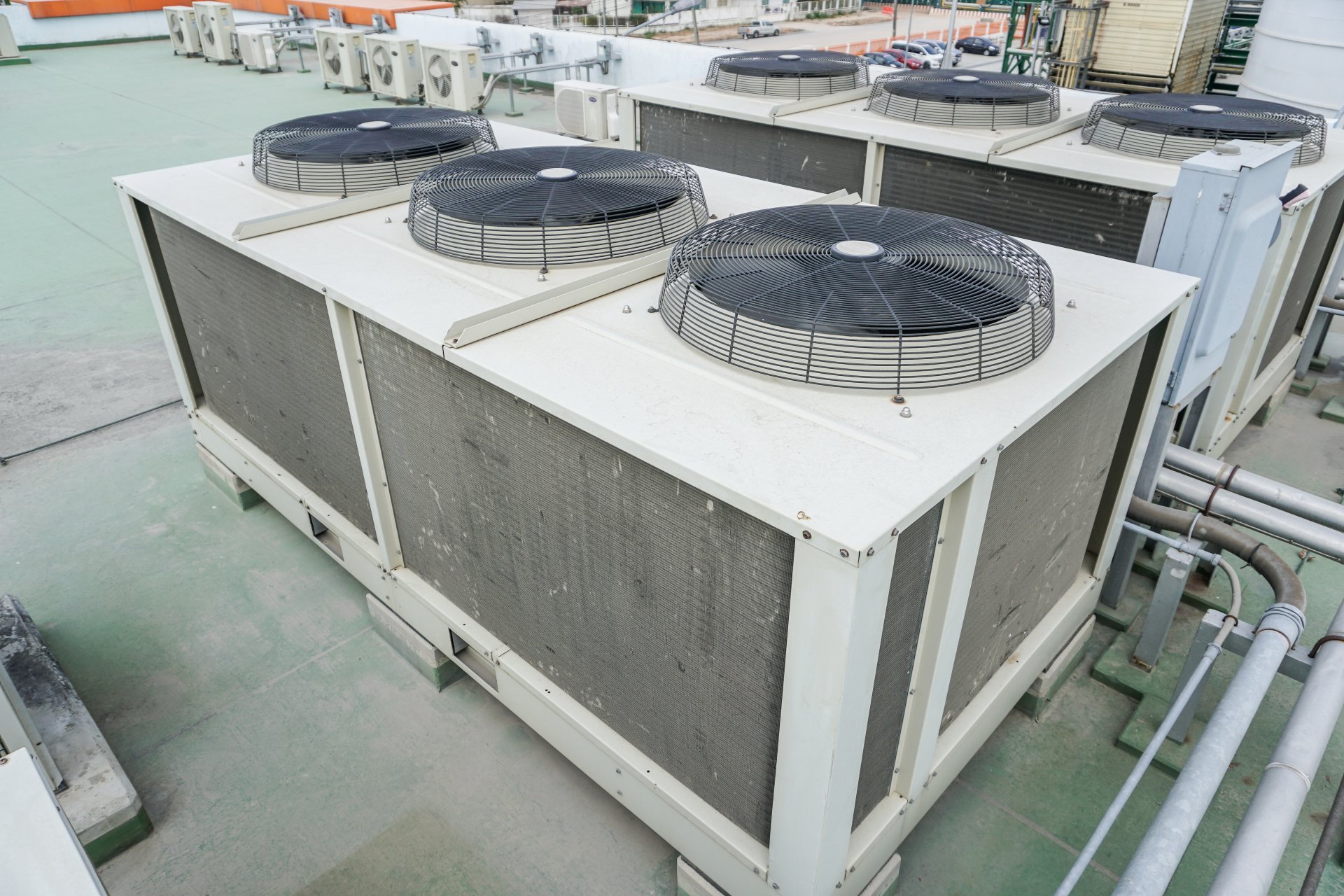
Walk-in cooler installations on DC restaurant roofs face a nuanced vapor management challenge tied to the region's distinct seasonal humidity profile. DC summers bring humidity that rivals the Deep South—dew points above seventy degrees are routine from June through August. DC winters, by contrast, produce dry, cold air from continental polar systems that creates a vapor drive in the opposite direction, from inside the building outward. A vapor management system that accounts for both directions—closed-cell foam at cooler bases combined with a smart vapor retarder that responds to seasonal vapor drive reversal—handles DC's biphasic humidity environment more effectively than a single-direction vapor barrier design.
DC's food service licensing is administered through the DC Department of Health, with Environmental Health Specialists conducting inspections that include kitchen exhaust performance evaluation. The District's inspection program has been increasingly attentive to grease exhaust documentation following several high-profile restaurant fires in the Shaw and Columbia Heights corridors. Restaurant operators in DC should maintain records of both their hood cleaning service visits and their rooftop exhaust curb inspection dates, since an Environmental Health inspector may request that documentation as part of a comprehensive ventilation compliance review.
The QSR market across the DC metro area—spanning the District itself, Montgomery and Prince George's Counties in Maryland, and the Northern Virginia jurisdictions—creates a roofing contractor demand that frequently outpaces local capacity. National franchise systems like Chipotle, Panera, and Five Guys, which have significant presence across the metro, often specify manufacturer-certified installation as a lease and warranty requirement. DC-area contractors who hold active certifications with Carlisle SynTec, Soprema, and GAF serve that franchised market while also handling the independent restaurant and brewery segment that characterizes the District's most vibrant dining neighborhoods.
Nor'easter events that affect the DC region typically deliver heavy, wet snow that loads flat restaurant roofs rapidly and can trigger structural concerns on older commercial buildings in the Capitol Hill and Georgetown historic districts. Restaurant operators in those areas who are not certain of their building's original design snow load should consult a structural engineer before the first significant snowfall of each season and establish a clear snow removal threshold—expressed in inches of accumulation—that triggers emergency removal. Removing snow from a restaurant roof without damaging the membrane requires experienced operators using roof-safe tools; a standard metal shovel will destroy a single-ply membrane in minutes.
DC's restaurant industry operates on a calendar defined by congressional sessions, administration transitions, inauguration events, and the spring and fall peak visitor periods tied to the Cherry Blossom Festival and fall foliage season. January of even-numbered years, when inaugurations draw massive visitor influxes, is among the most costly times for any planned restaurant closure. Scheduling significant roofing projects in the August congressional recess period—when business dining slows with the departure of the federal workforce to summer vacations—gives operators a natural window where reduced covers make phased project work economically tolerable.
- Storm Damage Roof Repair
- Energy Efficient Cool Roof Installation
- Multifamily Roofing
- Humidity Damage Roof Repair
- Built Up Roofing
- Hail Damage Roof Restoration
- Office Building Roofing
- EPDM Commercial Roofing