
Office Building Roofing roof planning built from the roof condition.
Commercial roof scope, documentation, access planning, and weather-aware scheduling for acrylic roof coatings.
Booz Allen Hamilton's corporate headquarters at in McLean anchors the Northern Virginia federal contractor corridor, but the heart of the Washington DC office roofing market sits in the District itself, where federal agency buildings, Class A law firm offices, and the rapidly expanding Capitol Riverfront mixed-use district demand commercial roofing practice that navigates federal procurement requirements, historic preservation regulations, aggressive energy codes, and some of the most complex occupied-building coordination challenges in the country. The GSA's National Capital Region portfolio alone encompasses tens of millions of square feet of office space with ongoing re-roofing needs.
Federal agency and federally leased office buildings in DC are subject to the GSA Facilities Standards for the Public Buildings Service, which impose roofing performance requirements significantly more demanding than the DC Building Code. GSA P-100 roofing specifications require FM Global or UL-approved system assemblies, minimum R-values that typically exceed DC IECC requirements, and third-party inspection and testing during installation. DC-area roofing contractors working on GSA-occupied or GSA-leased buildings must demonstrate familiarity with federal procurement procedures, prevailing wage requirements under the Davis-Bacon Act, and the additional documentation and QC procedures that federal projects require. These requirements effectively pre-qualify the competitive field to contractors with specific federal project experience.
Historic preservation requirements apply to a significant portion of DC's commercial office stock. Buildings within Capitol Hill, Georgetown, Dupont Circle, and other designated historic districts require Certificate of Appropriateness review from the DC Historic Preservation Office before any visible changes to the building envelope — including rooftop equipment additions, changes to parapet coping profiles, or installation of rooftop mechanical screening — can be permitted. HPRO review is separate from and in addition to the DC DOB permit process, and the HPRO review timeline can add weeks to months to the project schedule. Experienced DC commercial roofing contractors who have navigated the HPRO process previously know how to present project designs in the format preferred by HPRO reviewers and can reduce review time.
Green building and energy performance requirements in Washington DC are among the most stringent in the country. The DC Green Building Act requires commercial buildings over 50,000 square feet to achieve LEED certification, and the DC Building Energy Performance Standards program requires covered buildings to meet escalating energy use intensity benchmarks with financial penalties for non-compliance. Re-roofing projects on covered commercial buildings should be designed to contribute meaningfully to LEED certification and BEPS compliance, which means specifying the highest practical SRI membrane, maximizing insulation R-value within structural constraints, and documenting all performance data to support both LEED submissions and BEPS benchmarking.
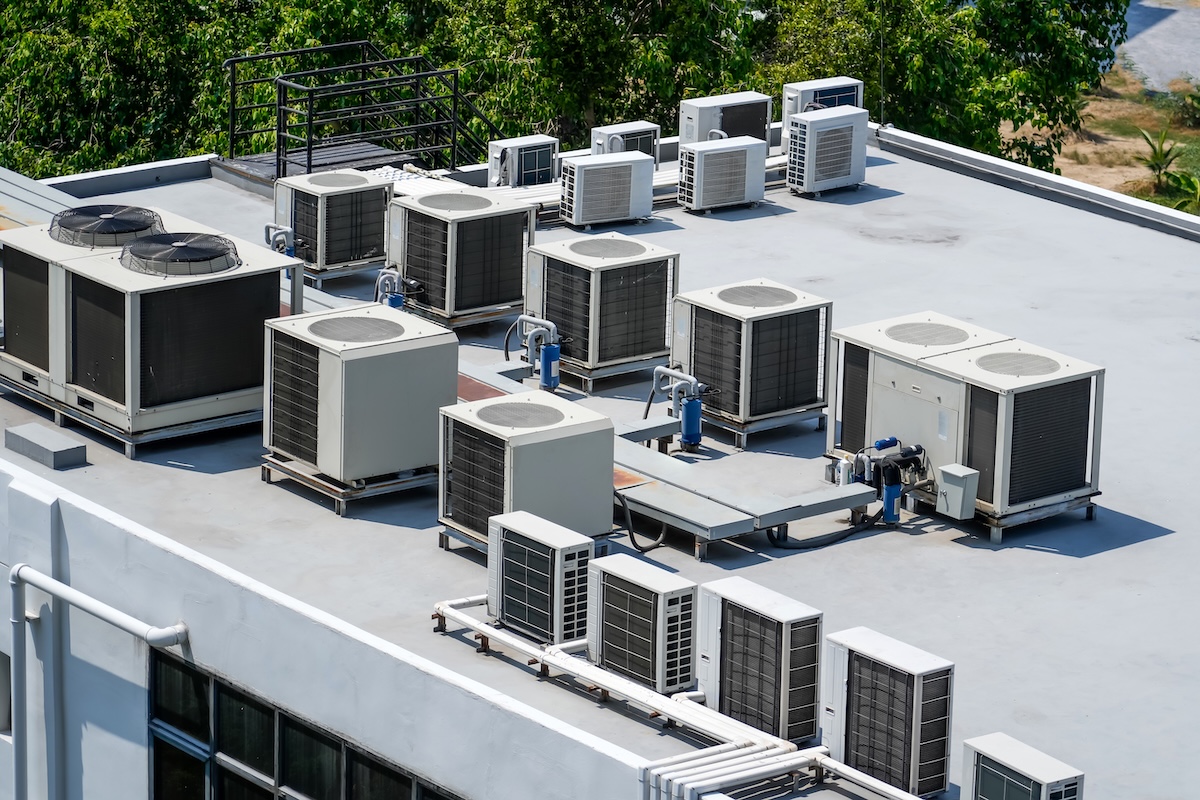
HVAC coordination for Washington DC Class A office buildings is particularly demanding in federal buildings and high-rise towers where rooftop mechanical penthouses house equipment serving hundreds of thousands of square feet of occupied space. The re-roofing contractor must work in close coordination with the mechanical contractor and building engineering staff to ensure that re-roofing activities never simultaneously disrupt HVAC service to occupied floors. Phased access to rooftop mechanical areas, with detailed sequencing plans reviewed and approved by building engineering before project start, is the standard approach for complex DC office re-roofing projects. Rooftop chillers, air handling units, and cooling towers on DC high-rise office buildings represent major assets that must be protected from roofing debris and activity throughout the construction period.
Occupied-building protocols for DC office re-roofing are made more complex by the security requirements of buildings housing classified agencies, federal courts, or other high-security tenants. In some cases, roofing contractor employees must submit to background investigation and receive visitor badges tied to specific work areas before being permitted to access the roof. Work plans must be reviewed and approved by the building security manager, and unescorted access to some roof zones may be prohibited regardless of the work required. These requirements are non-negotiable and must be incorporated into the project schedule, as background investigation processing times can extend beyond four weeks for certain building security classifications.
Lease obligations in the DC Class A office market involve some of the most legally sophisticated lease agreements in the country, drafted by major law firms with significant experience in landlord-tenant dispute resolution. Office leases in Class A DC buildings routinely include explicit provisions covering landlord's obligations for building maintenance, notice requirements before significant work, tenant protections against disruption, and remedies for lease breaches. Before any re-roofing project in a DC office building, the building owner's legal counsel should review all tenant leases and identify any provisions that could be triggered by the planned roofing activity, and a coordinated tenant communications plan should be developed to ensure full compliance with all contractual obligations.
DC's stormwater management regulations create specific requirements for commercial re-roofing projects that may not be familiar to contractors or building owners accustomed to working in less-regulated markets. The DC DOEE's Stormwater Management Guidebook sets retention requirements for major development and substantial improvement projects, and some commercial re-roofing scopes may qualify as substantial improvements under DOEE's definitions. The RiverSmart Commercial program provides technical assistance and potential financial incentives for green infrastructure measures incorporated into commercial building renovation projects. Early pre-application consultation with DOEE is the most reliable way to determine whether a specific re-roofing project triggers retention requirements and what compliance options are available.
The DC commercial roofing market includes firms that specialize in federal and government building work, firms with strong historic preservation credentials, and firms with deep experience in occupied high-rise office re-roofing logistics. The most capable projects require contractors who can navigate all three of these specialty domains simultaneously. Reference checks with other DC property managers and federal building facility managers are the most reliable method for identifying contractors with the specific capability profile needed for a complex DC office re-roofing project.
- Metal R Panel Roofing
- Hail Damage Roof Restoration
- Warehouse Roofing
- Hotel Roofing
- Drone Roof Inspection
- Commercial Roof Tear Off Replacement
- Industrial Roofing
- Commercial Reroofing