
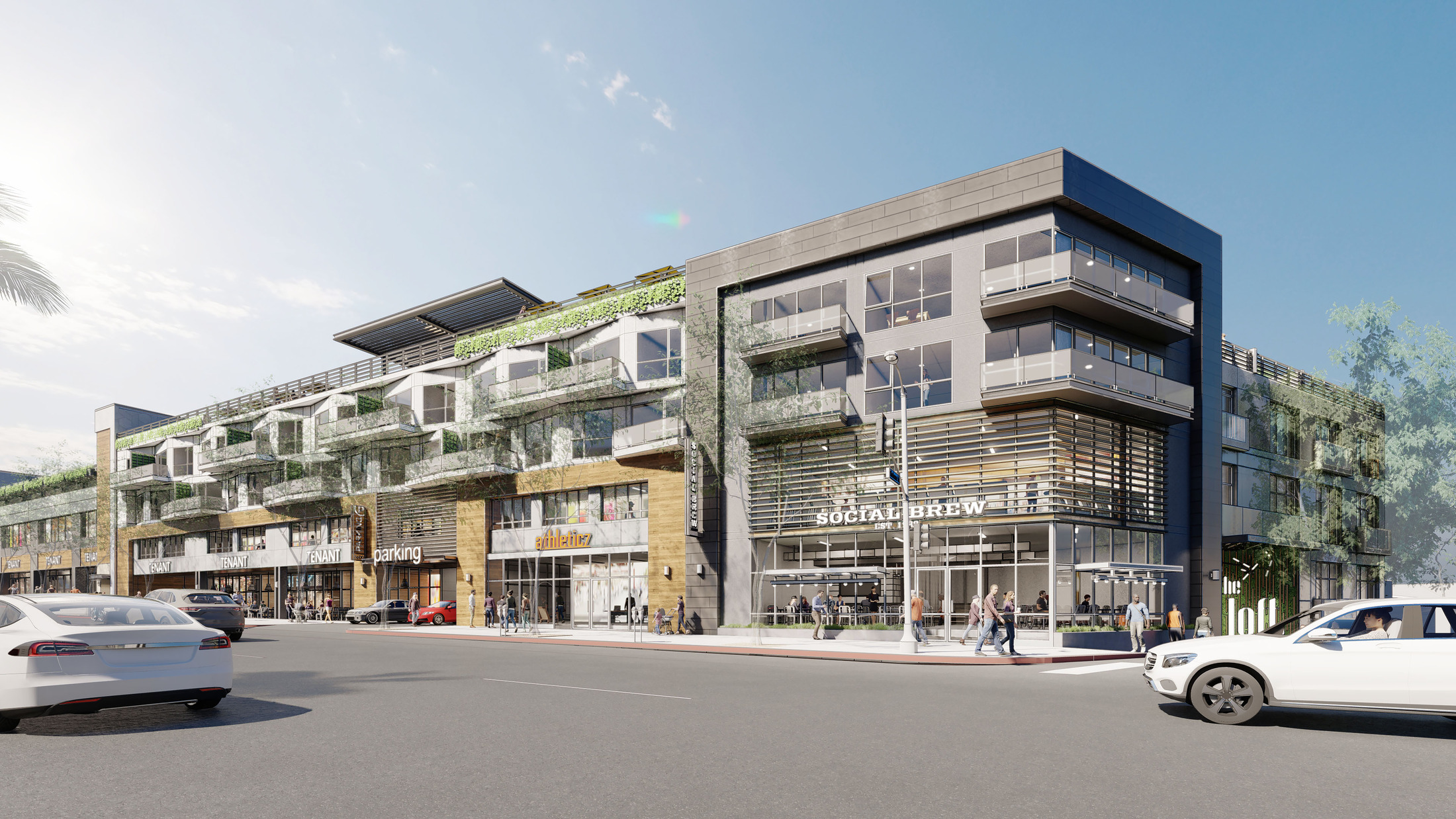
Mixed-Use Development Roofing roof planning built from the roof condition.
Commercial roof scope, documentation, access planning, and weather-aware scheduling for acrylic roof coatings.
The DC Metropolitan climate combines Mid-Atlantic humidity with the temperature extremes of an inland continental location to produce a year-round roofing performance challenge that is harder than either purely humid Southern markets or purely cold Northern ones. Washington averages roughly 16 inches of annual snowfall, periodic ice events, and summer humidity that sustains above 70 percent relative humidity for months at a stretch, creating the moisture loading conditions most associated with Pacific Northwest markets while also delivering summer heat index values above 100°F and the freeze-thaw cycling of the Mid-Atlantic winter. Mixed-use roofs in the District must perform across this full range simultaneously, which rules out membrane systems optimized for a single climate characteristic and demands assemblies with balanced thermal, moisture, and UV performance across the full annual cycle.
Green roofs in Washington, DC carry regulatory weight beyond the sustainability branding that motivates them in other markets. DC's Green Area Ratio requirements mandate a minimum landscape coverage metric for new development, and vegetated roofs count toward that metric in a way that no other roofing system can replicate. The result is that green roofs are not optional amenities on most new mixed-use construction in the District—they are compliance instruments, and their waterproofing must be specified and installed to a standard that reflects their mandatory status. DCRA plan reviewers are familiar with green roof assembly documentation and will flag assemblies that lack root-resistant membrane certifications, drainage-composite sizing calculations, or the substrate depth specifications required under the Green Area Ratio technical guidelines.
The NoMa and H Street corridor mixed-use buildings sit above the DC Metro infrastructure in ways that impose additional structural and waterproofing constraints. Metro's tunnel vibration requirements restrict the construction methods available for deep-anchor systems, and the vibration environment within the tunnel zone affects how rooftop mechanical equipment must be isolated. Buildings within the Metro tunnel protection zone must obtain WMATA approval for any deep excavation or anchor system—including roof anchor points for fall-protection systems and structural support for heavy rooftop equipment—and that approval process can add weeks to project schedules if not initiated early. Contractors experienced in the NoMa market understand this constraint and factor it into their logistics planning from the first preconstruction meeting.
Fire-rated assemblies in Washington mixed-use buildings are governed by DC's construction codes, which are based on the IBC but maintained independently by DCRA with DC-specific amendments and interpretations. The District's urban density and the presence of large numbers of mixed-occupancy buildings have produced a regulatory context in which fire-separation requirements are enforced rigorously at both plan review and inspection stages. Contractors working in DC should expect to provide assembly documentation packages that include UL-listed assembly numbers, material submittals for each component in the assembly, and a signed contractor certification that the installed assembly matches the approved documentation. Generic descriptions will be returned for revision regardless of how accurately they describe the intended system.
The multi-stakeholder complexity of DC mixed-use buildings reaches its maximum intensity in affordable housing mixed-income projects developed with Low-Income Housing Tax Credits, New Market Tax Credits, and DC Housing Finance Agency financing. These projects typically involve a developer entity, a housing authority partnership, multiple investor limited partners, and a community development corporation, each of which may have inspection rights and reporting requirements related to building systems. The roofing contractor's documentation package—warranty certificate, as-built drawings, maintenance manual, and annual inspection protocol—must be formatted for submission to all of these parties, not just delivered to a single building owner. Contractors who have previously delivered documentation packages for LIHTC and NMTC projects in DC understand the requirement and can provide appropriate formats without special instruction.
Washington's mixed-use development pipeline will remain among the most active in the country through the remainder of the decade, with planned projects at RFK Stadium, the St. Elizabeths East campus, and the continued build-out of the NoMa and Capitol Riverfront districts all requiring sophisticated roofing solutions. Contractors who can demonstrate DC-specific regulatory experience—DCRA permit processes, Green Area Ratio compliance documentation, WMATA tunnel protection zone procedures—and who can provide the multi-party documentation packages required by DC's complex mixed-income financing structures will be consistently positioned to compete for the District's most significant mixed-use projects.
- Wind Uplift Roof Repair
- Industrial Roofing
- Healthcare Facility Roofing
- Solar Roof Integration
- Spray Foam Roofing
- Emergency Tarp Dry
- Multifamily Roofing
- PVC Roofing