
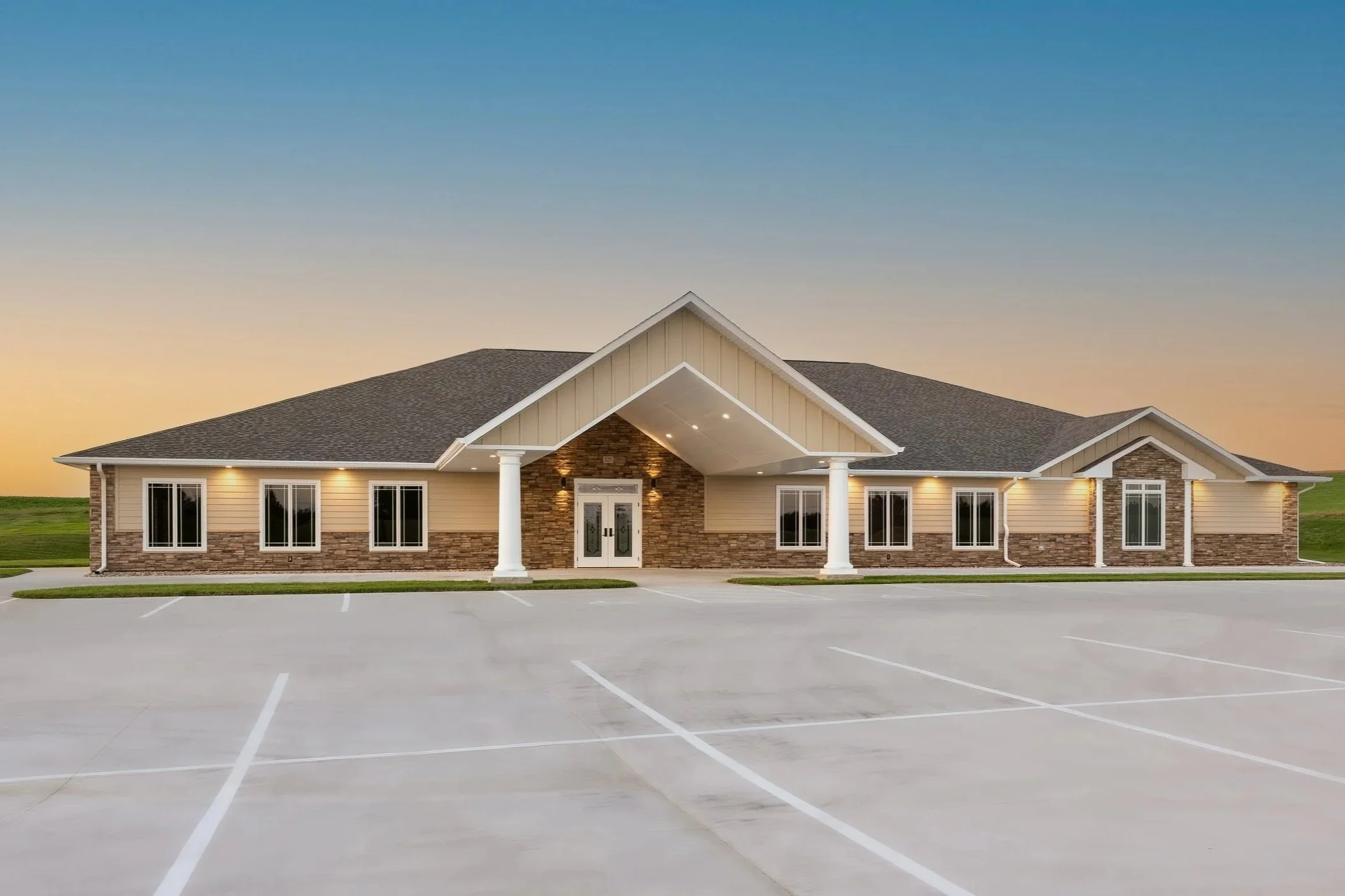
Funeral Home & Mortuary Roofing roof planning built from the roof condition.
Roofing for funeral homes and mortuaries across the District, scheduled around services and built to keep preparation-room ventilation running the entire time.
A roof that has to disappear from the day
A funeral home is judged on quiet, on dignity, and on the absence of anything that pulls a family out of the moment. A roofing crew is, by nature, the opposite of all three. Our entire approach to mortuary work in Washington is tuned to making the project felt as little as possible by the people who walk through the front doors. Families come to homes along the Georgia Avenue corridor in Petworth, to the long-established establishments around U Street and Shaw, and to the chapels serving Anacostia and Congress Heights east of the river, and the last thing any of them should notice is roofers.
That starts with how we sequence the work against the calendar. Funeral homes do not close. Visitations run into the evening, services are scheduled on a few days' notice, and weekends are often the busiest stretch of the week. We ask for the director's booking calendar before we mobilize and we plan tear-off and hot-work around it, not the other way around. When a service is on the books, the chapel side of the roof goes quiet. We stage noisy operations for the mornings and the gaps, and we keep crew, trucks, and debris off the public approach and out of sightlines from the visitation rooms.
The preparation room exhaust is not negotiable
The piece of a funeral home roof that gets the most respect from us is the preparation-room exhaust stack. The embalming area runs under negative pressure to pull formaldehyde and other vapors up and out, and that exhaust has to keep running for the staff working below to stay in compliance and stay safe. We locate the stack on the first walk, carve the flashing around it out as its own scope item, and confirm with the director that the fan stays live during any work within reach of it. We do not cap it, we do not block it, and we do not pull it offline because it is in the way of a clean membrane run. If the detail around it is failing, we rebuild it with the system live and the area ventilated.
Chapels, canopies, and the older buildings of the District
Two roof areas drive most of the surprises on DC funeral homes. The first is the chapel itself, which is often a clear-span room of forty to sixty feet with no interior columns. Long spans flex and they carry real wind uplift, so the deck type and the existing attachment get checked before we settle on a fastening pattern. The second is the porte-cochere, the covered drive where families are received. That canopy-to-wall transition takes thermal movement and a little settlement every year, and on older homes it is almost always where the chronic drips start. We treat it as its own line item and reflash it properly rather than chasing it with sealant.
Many of the District's funeral homes occupy buildings that have served the same neighborhoods for generations, which means built-up roofs over wood or concrete decks hiding under a newer cap. Before we ever recommend recovering rather than replacing, we core the assembly and run a moisture survey. Wet insulation under a surface that still looks intact is common on these buildings, and recovering over it just buries the problem under a fresh warranty.
Working with family owners and chain operators alike
Washington's funeral homes split between multigenerational family businesses and regional operators with facilities handled at the corporate level. Both want the same things from a roofer: discretion, a schedule that respects the families, and a written record at the end. We give the director a daily report confirming the roof is watertight before the building closes each night, and we close out with permit records, the manufacturer warranty, a drain and flashing inspection, and a roof diagram for the building file.
How we keep the work watertight day to day
- Daily dry-in confirmed in writing before the home closes each evening, so an overnight storm never reaches a service.
- Tear-off limited to areas that can be made watertight the same day, never the full roof opened at once over occupied chapel space.
- Tapered insulation added under the new membrane to correct the ponding that older flat-roof homes almost always have.
- Adhered detailing at the prep-room stack and canopy transitions so the highest-risk penetrations get the most attention, not the least.
Funeral Home & Mortuary Roofing Questions
We plan the work against the director's booking calendar. When a service or visitation is scheduled, the chapel side of the roof goes silent and we keep crew and debris out of the public approach and out of sightlines. Noisy operations are staged for mornings and open gaps, and we confirm the roof is watertight before the home closes each evening.
It stays running. The stack is located on the first walk and the flashing around it is handled as its own scope item with the director's sign-off. We never cap, block, or take the exhaust offline for roofing convenience, and any work near it is done with the fan live and the area ventilated.
For a flat-roof home, 60-mil TPO over tapered polyiso is the usual starting point. The taper fixes the drainage problems that are common on older buildings and stops the ponding that shortens membrane life. Chapel and wood-deck areas get their attachment confirmed against the actual deck before we finalize the assembly.
Yes. Clear-span chapel roofs get a fastening pattern matched to their span and deck, the same way we approach church sanctuaries. The porte-cochere canopy and its connection to the building are inspected on every project and reflashed as a discrete item, since that transition is the most common source of chronic leaks on these buildings.
That is the goal: as little as possible. Staging stays off the public approach, trucks and debris stay out of the visitation sightlines, and the loudest work is scheduled away from service hours. We treat the building the way we would a hospital or a place of worship.
- Manufacturing Plant Roofing
- Hotel Hospitality Roofing
- Grocery Store Roofing
- Mixed Use Development Roofing
- Parking Structure Roofing
- Self Storage Roofing
- TPO Single Ply Roofing
- Storm Damage Roof Repair