
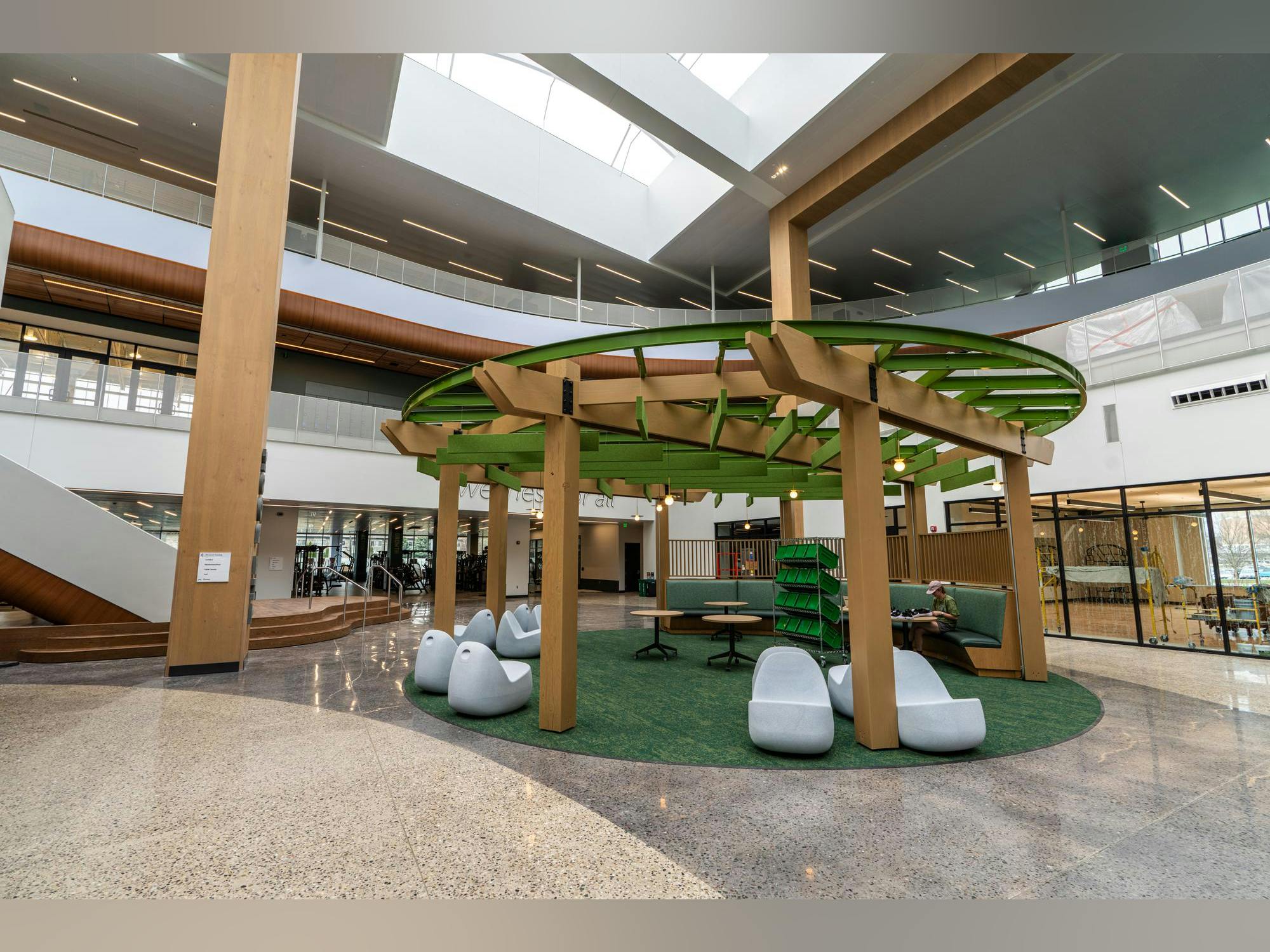
Fitness Center & Gym Roofing roof planning built from the roof condition.
Roofing for the District's gyms, studios, and athletic clubs, geared to the moisture they make inside and the heavy rooftop equipment that keeps the air moving.
The leak usually starts on the inside
Most building owners think about a roof as a barrier against the weather. On a gym, the harder problem comes from the other direction. Showers, steam rooms, hot tubs, and pool enclosures pump warm, wet air up against the underside of the deck all day, and that vapor will find its way into a roof assembly no matter how clean the membrane is on top. If the vapor control inside the assembly is wrong for our climate, that moisture condenses, soaks the insulation, and quietly destroys the R-value years before anything shows up as a stain on the ceiling. Scoping a fitness roof in Washington starts with the air inside, not the surface outside.
The District has a dense and varied fitness market. The 14th Street and U Street corridors are packed with boutique studios. VIDA and Sport&Health run full-service clubs around the city, and Equinox sits in the West End and downtown. National chains like Planet Fitness, LA Fitness, and Gold's Gym anchor neighborhood retail strips in wards across the city, and the DC Parks and Recreation aquatic centers add municipal pools to the mix. Each of those formats has its own roof problem, and a boutique cycling studio is not the same scope as a club with a lap pool.
Vapor control before anything else
The single most important decision on a gym roof is where the vapor retarder sits and what it is made of. Get it right and the assembly stays dry through years of pool-hall humidity. Get it wrong and the membrane warranty becomes irrelevant because the failure is happening below it. We open and inspect the existing assembly, check whether the vapor retarder is positioned correctly for the District's climate zone, and specify the right buildup for the reroof. For clubs with pools or steam, that usually means a fully adhered 60-mil TPO or PVC system, which drops the fastener penetration field of a mechanically attached roof and gives a more vapor-tight result at the membrane line.
The penetration count nobody expects
A gym roof carries far more rooftop equipment than its footprint suggests. Big open training floors need high-volume air handling to manage the carbon dioxide and moisture of a crowd. Group-fitness rooms, locker rooms, and any pool enclosure each get their own dedicated ventilation with supply and exhaust punching through the roof. The penetration count per thousand square feet is often two to three times what a comparable retail or office box would have, and every one of those curbs is a leak path under high humidity. We inventory every penetration and curb before pricing, raise any undersized curbs to meet the manufacturer's required flashing height, and detail each one for the moisture load rather than reaching for a standard pattern.
Working around a building that never really closes
DC gyms open before dawn and many run to midnight or around the clock, often every day of the year. The roof work has to fit between those hours, around pool-chemical deliveries, and around the HVAC windows that keep the air over an indoor pool within DC Health standards for public swimming facilities. We build that scheduling into the proposal as part of the scope, not as a change order discovered later. The facility manager gets a daily status note confirming the work area is watertight before the next operating cycle begins, and start times and noise limits near occupied locker rooms are set before we mobilize.
Chains and independents, same paperwork
National operators run their roofing through corporate facilities teams and approved-vendor programs, and we work inside those processes. Independent studio owners and the commercial landlords who lease to gyms get the same direct attention. Either way the closeout package is identical: permit and final inspection, manufacturer warranty registration, a roof-zone diagram with the full penetration inventory, a drain and flashing inspection, and photo documentation of every detail.
What we lock down on a fitness roof
- A vapor retarder positioned and specified for our climate, so interior humidity from pools and showers cannot wreck the insulation from below.
- A full penetration and curb inventory with undersized curbs raised to warranty height before the membrane goes down.
- Adhered single-ply over high-humidity areas to minimize fasteners through the deck and tighten the assembly.
- A schedule fitted to early-morning and around-the-clock hours, with daily watertight confirmation to the facility team.
Fitness Center & Gym Roofing Questions
By treating vapor drive as part of the assembly design. We check whether the existing vapor retarder is positioned correctly for the District's climate, then specify the right buildup for the reroof. A well-installed membrane on top does nothing if the vapor control below it is wrong, so this is the first thing we resolve.
Fully adhered 60-mil TPO or PVC. Adhered systems remove the fastener field of a mechanically attached roof and give a more vapor-resistant result at the membrane line, which matters when the building generates constant interior humidity. A gym without a pool can often use mechanically attached TPO more economically.
We set the schedule with the facility team before mobilizing. Tear-off and dry-in windows are confirmed daily in writing, the manager gets a status note so they can verify watertight protection before the next operating cycle, and crew start times and noise limits near locker rooms are documented up front.
Yes. Curb flashing is standard scope on a gym roof. We document every curb, its size, and its height before pricing, and undersized curbs, which are common on older gym buildings, are raised or replaced so the new membrane meets the manufacturer's flashing-height requirement.
Permit and final inspection certificate, manufacturer warranty registration, a roof-zone diagram with the penetration inventory, a drain and flashing inspection record, and photo documentation of the completed details. Chain operators get it formatted for their corporate facility system.
- Brewery Distillery Roofing
- Manufacturing Plant Roofing
- Hotel Hospitality Roofing
- Grocery Store Roofing
- Car Wash Facility Roofing
- Insulation Recovery Board
- Restaurant Roofing
- Silicone Roof Coatings